As a freelancer, you don't have an employer matching your 401(k). But that doesn't mean you should ignore retirement. In fact, you have access to powerful, tax‑advantaged accounts designed for self‑employed individuals. In this guide, we'll compare the best options – Traditional IRA, Roth IRA, SEP IRA, and Solo 401(k) – and help you choose the right one for your situation.
Why Saving for Retirement Matters
- No employer match – you need to be your own retirement planner.
- Tax benefits – reduce your taxable income now or withdraw tax‑free later.
- Compound growth – the earlier you start, the more you benefit from long‑term growth.
- Financial independence – give yourself the option to retire early or reduce workload later.
Quick Comparison
| Account type | Best for | Contribution limit (2026) | Tax treatment |
|---|---|---|---|
| Traditional IRA | Freelancers expecting lower tax in retirement | $7,000 ($8,000 if age 50+) | Pre‑tax (deductible) |
| Roth IRA | Freelancers expecting higher tax in retirement | $7,000 ($8,000 if age 50+) | After‑tax (tax‑free growth) |
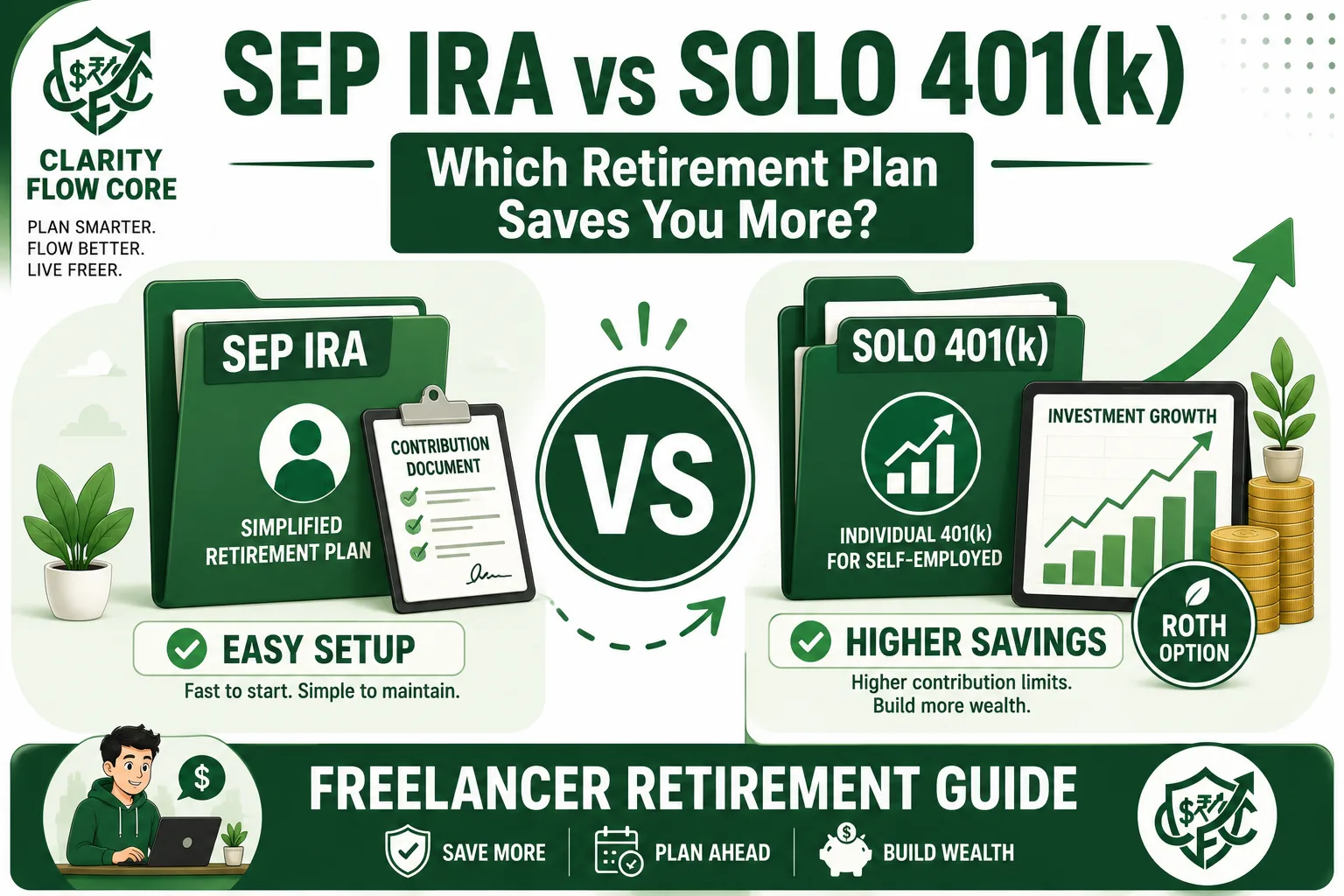
| SEP IRA | Freelancers with high income, or who want simplicity | Up to 25% of net self‑employment income (max $69,000) | Pre‑tax (deductible) |
| Solo 401(k) | Freelancers with no employees, who want to save more | Up to $69,000 (employee + employer contributions) | Pre‑tax (deductible) |
Traditional IRA – Simple and Tax‑Deductible
You contribute pre‑tax dollars, reducing your taxable income for the year. Your money grows tax‑deferred, and you pay taxes upon withdrawal. Contribution limits are $7,000 (or $8,000 if over 50). It's a great starting point for freelancers.
Roth IRA – Tax‑Free Growth
You contribute after‑tax dollars, but your money grows tax‑free, and qualified withdrawals are tax‑free. This is ideal if you expect to be in a higher tax bracket in retirement. Income limits apply – check if you qualify.
SEP IRA – High Contribution Limits, Easy Setup
A Simplified Employee Pension (SEP) IRA allows you to contribute up to 25% of your net self‑employment income, up to $69,000. It's straightforward to set up and maintain, making it a popular choice for solo freelancers.
Solo 401(k) – Max Out Your Savings
A Solo 401(k) (also called Individual 401(k)) allows you to contribute both as employee and employer. The total contribution limit is up to $69,000 (including catch‑up contributions). It's best for freelancers with high income and no employees. Requires more paperwork than a SEP IRA.
How to Choose
- If you're just starting out → Traditional or Roth IRA (low limits, easy setup).
- If you have high income and want simplicity → SEP IRA (high limit, minimal paperwork).
- If you have high income and want to save the most → Solo 401(k) (highest limits).
- If you expect to be in a higher tax bracket later → Roth IRA or Roth Solo 401(k) options.
Where to Open an Account
- Vanguard – low‑cost index funds, excellent for IRAs and SEP IRAs.
- Fidelity – offers Solo 401(k) plans with no fees.
- Schwab – competitive fees and wide investment selection.
- Betterment – robo‑advisor for IRAs (good if you want hands‑off).
Conclusion – Start Saving Today
Retirement may seem far away, but the earlier you start, the less you need to save each month. Choose an account that fits your income and goals, and automate your contributions. Future you will thank you.
Get started:
Vanguard (IRAs, SEP IRAs) →
Fidelity (Solo 401(k), IRAs) →
Schwab →