Cash flow is the lifeblood of your freelance business. Even profitable freelancers can run into trouble if they don't have enough cash to cover expenses between invoices. In this guide, I'll show you how to manage your cash flow effectively – with practical tips, a simple tracker, and strategies to avoid dry spells.
What is Cash Flow?
Cash flow is the movement of money in and out of your business. It's not just about how much you earn – it's about the timing. If your expenses are due before your clients pay you, you may have a cash flow gap.
Common Cash Flow Problems for Freelancers
- Late payments – clients pay 30, 60, or even 90 days after invoicing.
- Irregular income – some months are busy, others are quiet.
- Unexpected expenses – equipment failure, tax bills, health issues.
- No buffer – not having a financial cushion for slow months.
Step 1 – Forecast Your Cash Flow
Create a simple cash flow forecast for the next 3–6 months. List expected income (based on confirmed projects) and expected expenses (rent, software, taxes, etc.).
Tip: Use a Google Sheets template to visualise your cash flow. You can create one with columns for months, expected income, expected expenses, and net cash flow.
Step 2 – Speed Up Incoming Payments
- Invoice promptly – send invoices as soon as a project is completed.
- Offer discounts for early payment – e.g., 2% off if paid within 10 days.
- Use online payment gateways – Stripe, PayPal, or Wise to make it easy for clients to pay.
- Require deposits – ask for 30–50% upfront for large projects.
- Set clear payment terms – e.g., "Due on receipt" or "Net 15".
Step 3 – Delay Outgoing Payments (Ethically)
- Negotiate payment terms – ask suppliers for 30‑day terms.
- Use credit cards strategically – pay expenses with a card that offers 30‑day interest‑free periods.
- Time your tax payments – if your country allows quarterly payments, don't pay early.
Step 4 – Build a Cash Reserve
- Set aside 3–6 months of expenses – treat this as your emergency fund.
- Save automatically – transfer a percentage of each payment to a savings account.
- Replenish after using – if you dip into your reserve, prioritise rebuilding it.
Step 5 – Track Your Cash Flow Regularly
Review your cash flow weekly or monthly. Use a simple tracking system:
- Google Sheets or Excel – track income and expenses.
- Accounting software – Wave, FreshBooks, or QuickBooks.
- Business bank account – keep business and personal finances separate.
Free Cash Flow Tracker Template
I've created a simple Google Sheets template to help you track your cash flow. It includes:
- Monthly income and expense tracking.
- Automated net cash flow calculations.
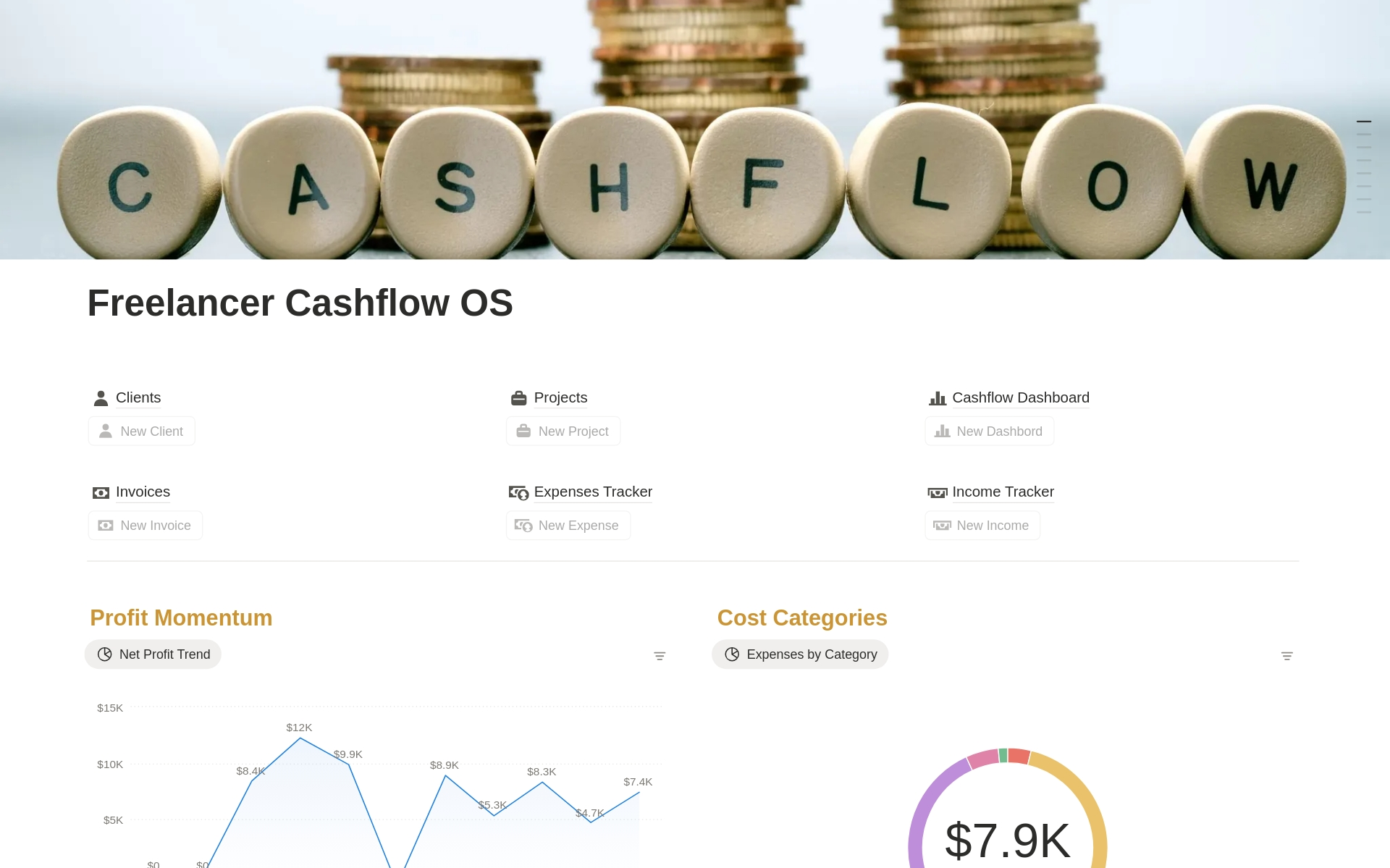
- Visual summary of your cash position.
👉 Copy the Cash Flow Tracker → (replace with your actual link)
Tools to Help You Manage Cash Flow
- FreshBooks – track income and expenses, send invoices.
- QuickBooks – advanced cash flow reporting.
- Wave – free accounting with cash flow insights.
- Float – dedicated cash flow forecasting tool (paid).
Conclusion – Take Control of Your Cash Flow
Cash flow problems can be stressful, but they are manageable. By forecasting, speeding up income, and building a buffer, you can reduce anxiety and focus on growing your business. Start with one small action today.
Get started with the cash flow tracker: Copy the template →